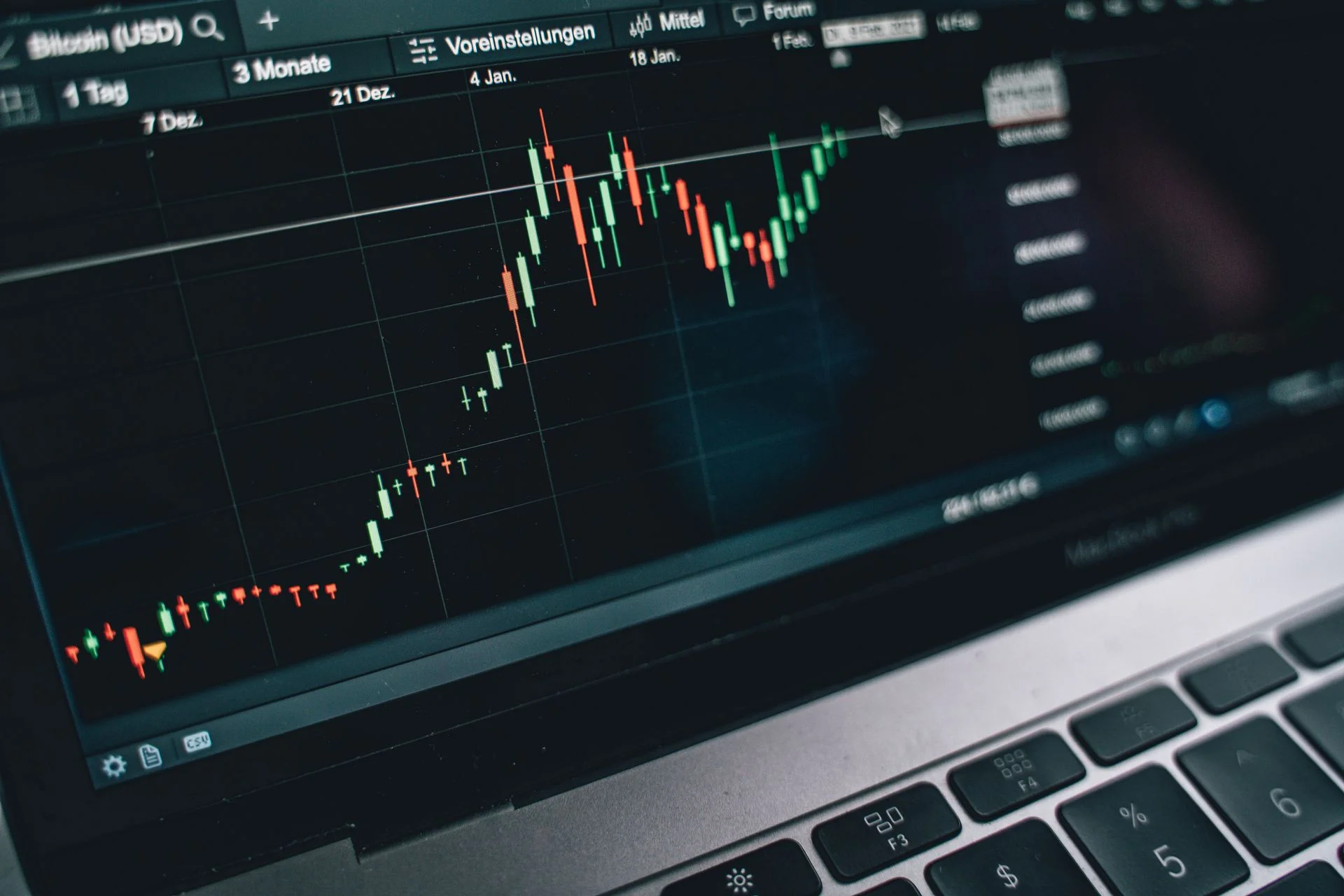
Imagine a typical market liquidation event: an unexpected macroeconomic data print or a cascading long squeeze hits, and an asset drops 8% in forty minutes. Order books hollow out, margin calls trigger automatically, and retail traders panic-sell at the exact structural bottom.
If you look at the widely used market sentiment trackers during that crash, they will likely tell you the market is perfectly calm. Why? Because the most popular Fear and Greed indices on the web only calculate their scores once every 24 hours, usually at midnight UTC.
By the time the daily clock resets and the index finally prints an “Extreme Fear” score of 18, the institutional buyers have already stepped in, the cascading liquidations have stopped, and the market has rebounded 10% off the lows. You didn’t just miss the entry window; you read yesterday’s news.
This structural latency gap is why I stopped relying on legacy sentiment dashboards and built a real-time infrastructure to track crowd psychology as it happens.
The Core Defect of 24-Hour Sentiment Models
Most retail investors view sentiment indicators as absolute baselines for contrarian execution—following Warren Buffett’s classic axiom to be greedy when others are fearful. But the math behind standard daily indices reveals a massive flaw for anyone trying to execute active risk management.
Traditional models aggregate data over trailing 30-day or 90-day moving averages for volatility, volume, and social media trends. When a fast-moving market regime shift occurs over a 4-hour window, that sudden burst of data is heavily diluted by weeks of historical baseline metrics.
| Index Type | Data Refresh Rate | Operational Trade-off | Strategic Utility |
| Legacy Indices | Once per 24 Hours | High execution lag; smooths out highly profitable intraday panics. | High-level macro positioning and portfolio rebalancing. |
| Real-Time Engines | Continuous / Sub-hour | Higher noise profile; requires volatility filters to prevent fakeouts. | Precision timing for derivatives, scalping, and localized spot bottoms. |
A common mistake is treating sentiment as a stationary metric. In reality, market emotion is highly fluid. If an index cannot catch a micro-capitulation within minutes of it occurring, it becomes an explanatory tool rather than an execution tool. It tells you why you lost money or missed a trade, instead of preventing the mistake in the first place.
Deconstructing the Real-Time Pipeline
To build an engine that accurately reflects real-time sentiment without getting bogged down by brief trading noise, you have to completely re-engineer the data sources. You cannot just check Google Trends once a week or run a manual poll. Instead, a live system relies on streaming infrastructure across three core pillars:
1. Velocity of Order Book Imbalance
Instead of just looking at total daily trading volume, a real-time system tracks the ratio of aggressive market selling to passive limit orders. When a panic starts, market orders sweep through multiple layers of the bids, causing deep spread widening. By calculating the rate of change in order book depth across major exchanges, you catch structural fear before the candle even closes.
2. The Liquidation Engine
In highly leveraged environments like crypto or index futures, true market capitulation is driven by forced liquidations, not voluntary selling. A live sentiment tracker listens to real-time websocket streams from exchange liquidation engines. A sudden spike of tens of millions of dollars in forced liquidations within a 5-minute window pushes the index immediately into extreme fear, indicating a structural exhaustion point for sellers.
3. High-Frequency Text Analytics
Social media monitoring cannot rely on volume alone; it requires natural language processing (NLP) tailored to market vernacular. A live tracker parses streaming text from platforms like X (formerly Twitter), Reddit, and Telegram, measuring the acceleration of specific risk-off keywords (such as liquidated, crash, over, or capitulation). The system looks for a sharp deviation from the baseline hourly text velocity.
The Technical Trade-off: The primary challenge with live data is filtering out the noise. If your index swings from 30 to 70 every time a single whale places a large market order, the tool becomes useless. To solve this, a robust real-time index applies an exponential moving average (EMA) that responds rapidly to sustained volume shifts but discards isolated, low-volume price spikes.
Activating Sentiment as an Execution Overlay
Let’s be completely candid: an extreme sentiment reading is not a standalone buy or sell signal. Another major pitfall traders face is market-buying the exact moment an index drops into “Extreme Fear.”
During a severe macro regime shift or a systematic banking failure, a market can remain in deep, structural extreme fear for weeks while prices continue to cascade downward. If you blindly buy the first dip based on sentiment alone, you risk getting caught in a cascading drawdown.
Instead, a real-time sentiment engine should be used as a validation filter alongside your primary technical toolkit.
[Structural Support Level Identified]
                  │
                  ▼
[Price approaches the Order Block / Key Level]
                  │
                  ▼
[Real-Time Sentiment hits Extreme Fear (<20)]
                  │
                  ▼
[Action: Execute Long Position with Defined Risk]
This approach works exceptionally well because it ensures you only take a position when structural technical value aligns with psychological exhaustion. If price hits your support level but the live sentiment index is still sitting at a comfortable 55 (Neutral), it tells you the true retail capitulation hasn’t happened yet. The floor might drop lower. You wait.
Conversely, when price cuts into a major support level and the live index flashes a warning that panic has reached an unsustainably high velocity, you know the seller pool is running dry. That is your execution edge.
Automating the Observation Gap
No one has the cognitive capacity or the time to sit and stare at a live sentiment dashboard twenty-four hours a day. The human brain is naturally flawed for this task; if you watch the charts constantly during a crash, the prevailing panic will eventually infect your own decision-making process, causing you to hesitate or abandon your trading plan entirely.
The entire point of converting raw sentiment data into a live system is to remove human emotion from the equation through automation. You want to be notified when the market reaches an emotional extreme, completely independent of your own biases.
This exact problem is why I developed Fear Greed Live.
Instead of requiring you to refresh a website or keep a browser tab open, the platform acts as an automated infrastructure layer for your investing or trading. It monitors these real-time shifts continuously and sends direct, instant notifications the exact moment the market swings into deep fear or euphoric greed.
You can route these critical sentiment alerts straight to the platforms you already use every single day:
- Telegram & Discord: Perfect for immediate mobile or desktop pings alongside your trading channels.
- Slack: Ideal for keeping an eye on broader market environments while managing your daily professional workflows.
- Email & In-App Alerts: For deeper, structured updates when thresholds are crossed.
By setting clear psychological boundaries and letting an automated system handle the monitoring, you free up your mental capital. You stop guessing what the crowd feels, and you start executing based on what the data actually proves.
Not only real-time notifications, feargreed.live also provides 10+ years old historical data with CSV or XLS export features.